

UC1 · Step 4 of 5 — Save the assignment
Maria Rivera · Staffing Clerk · Dept 3630 / Line 5 · Tuesday, 06:02
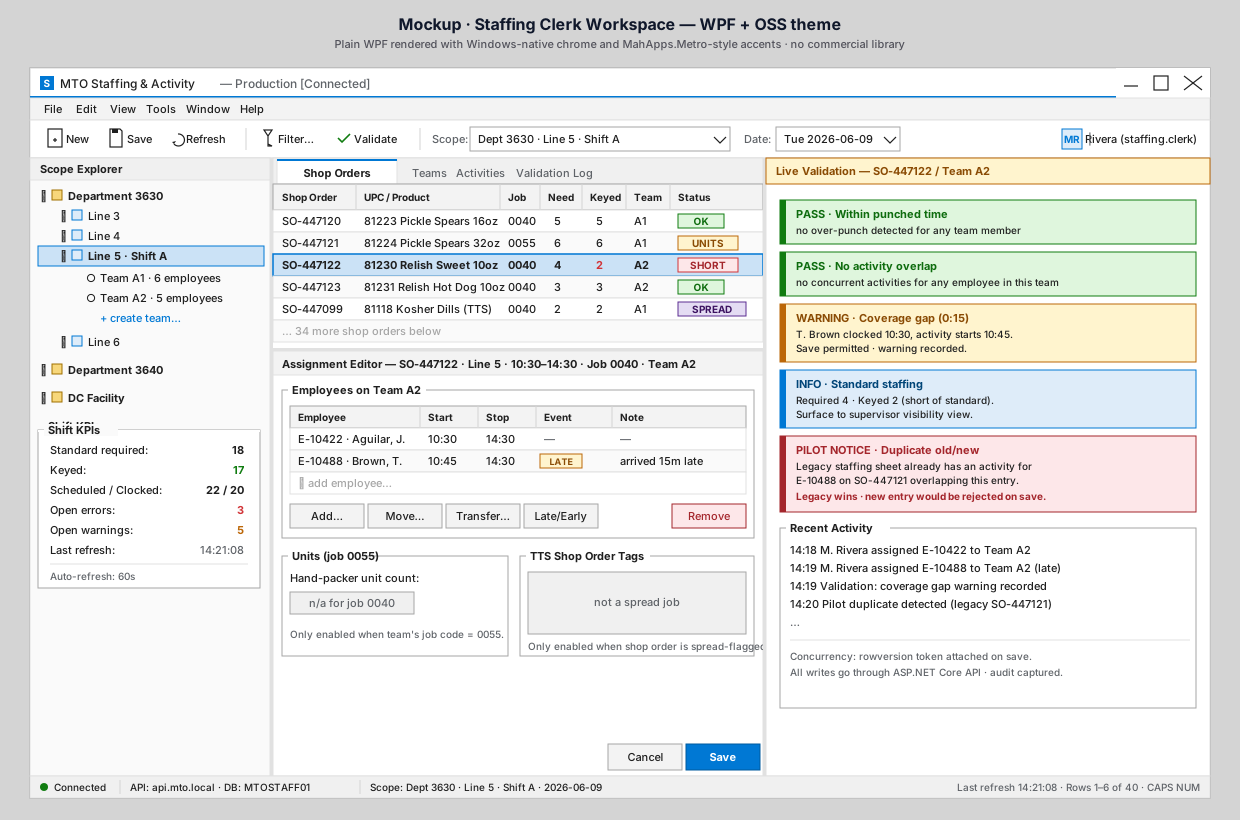
Maria reviews the validation panel one more time. The hard rules pass. The coverage-gap warning is acceptable — she'll let the timekeeper note it. The pilot-duplicate notice doesn't apply to this entry. She clicks Save.
What happens behind the scenes (without her having to think about it)
- The desktop app sends the assignment to the ASP.NET Core API with an optimistic concurrency token (so if someone else edited this order in the same second, Maria gets a clear conflict message — no silent overwrite).
- The API re-runs the validation rules server-side (defensive — the desktop validation is for speed; the server check is for correctness) and writes to SQL Server.
- An audit event is recorded: who, what, when, before/after. This is visible in the Recent Activity panel on the right (Maria can see her own edits) and in the timekeeper's audit trail.
- The Activity Errors view updates: the warning is now visible to Kavi (timekeeper) but does not block anything.
- The standard-vs-keyed number on the shift KPI tiles ticks up. The supervisor's dashboard (see UC3) will reflect this on its next 60-second refresh.
- The PLP / BI feed picks up the new activity rows on its next poll. No separate "send to PLP" button — the downstream poll handles it.
What Maria sees
- The save button briefly disables and re-enables. The validation panel refreshes — coverage-gap warning still shown (it's a real warning, not cleared by saving). PASS / PASS / INFO unchanged.
- The status bar at the bottom shows:
Last refresh 14:21:08 · Rows 1–6 of 40 · CAPS NUM— the order row in the list is now reflected. - The next order in the list is still the active context. She can click another row and keep going.
What does not happen
- Maria does not walk to timekeeping.
- Maria does not call the supervisor to tell them she met standard.
- Maria does not wait until end of shift to find out if her work matches the punches.
Why it matters
The save is more than "writing to the database." It's the moment where the decision becomes auditable, downstream systems get the data, and the rest of the organization (timekeeper, supervisor, payroll, warehouse, reporting) is informed — without Maria having to do any of that explicitly.
⬅ Prev: Step 3 — Live validation · Use Case Index · 🏠 Demo Home · ▶ Next: Step 5 — Recap